Fliesen-Triumph: Pai Gow Pokers blitzschnelle Entscheidungen, die die Chancen stabilisieren
Otto Werner · Apr 18, 2026
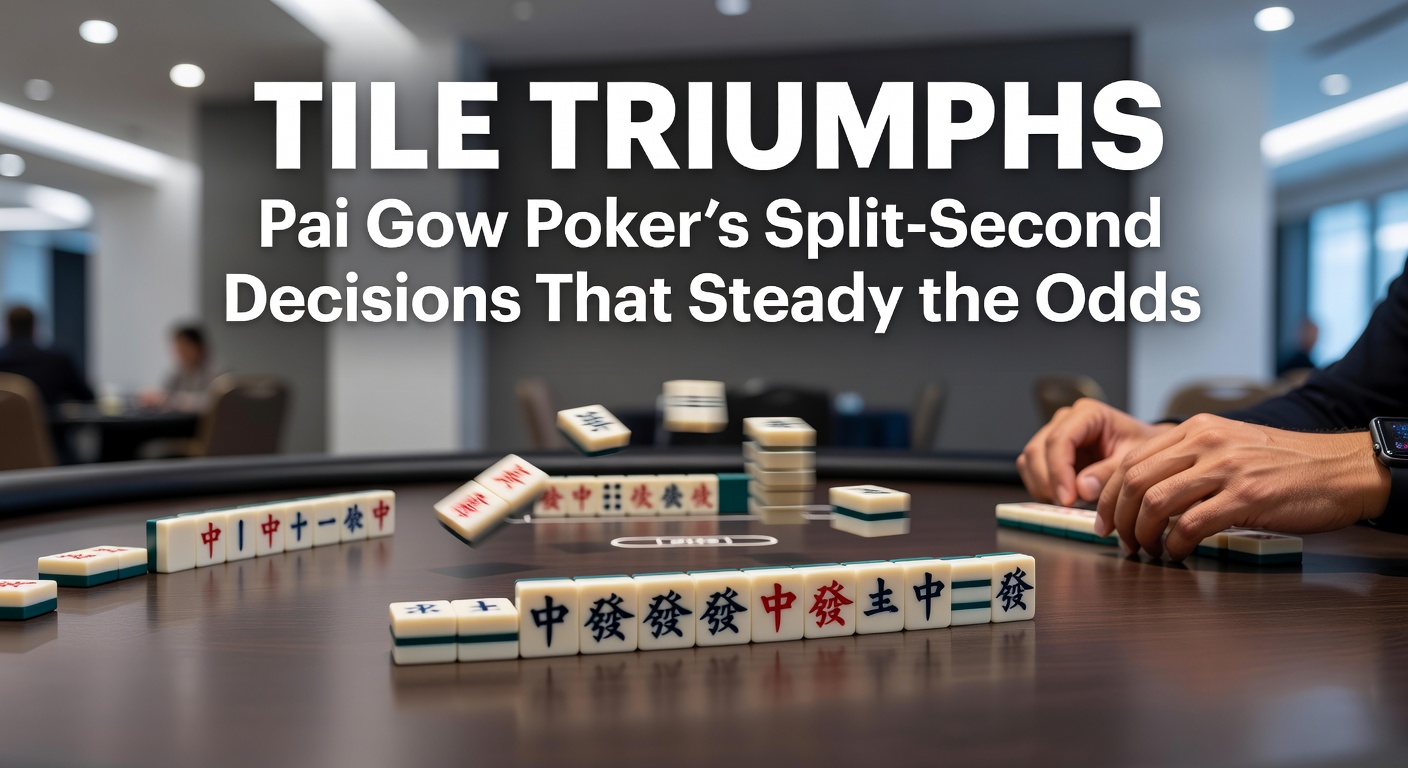
Fliesen-Triumph: Pai Gow Pokers blitzschnelle Entscheidungen, die die Chancen stabilisieren
Die Wurzeln von Pai Gow Poker: Von alten Fliesen zu modernen Karten
Experts trace Pai Gow Poker back to the ancient Chinese game of Pai Gow, which used domino-like tiles, yet the poker variant emerged in the mid-1980s in California casinos, quickly spreading across the US and beyond because players appreciated its slow pace and low house edge. Data from the Nevada Gaming Control Board reveals that by the 1990s, Pai Gow Poker tables filled casino floors in Las Vegas, where annual revenues from table games like this one climbed steadily; turns out, the game's structure – dealing seven cards to each player and the dealer – allows for strategic depth without the frenzy of faster-paced games like blackjack. Players receive their cards face down, set them into a five-card high hand and a two-card low hand, aiming to beat both of the dealer's hands simultaneously, and while a push occurs if only one hand wins, the house edge hovers around 2.84% with optimal play, according to analyses by gaming mathematicians.
What's interesting is how this setup mirrors the tile version's balance of luck and skill, but with standard poker hands; observers note that casinos introduced face-up dealing or bonus bets in later years to boost action, yet the core remains those pivotal splitting decisions that can swing odds in subtle ways. And in regions like Macau, where tile Pai Gow thrives alongside the poker adaptation, revenue figures from 2025 show hybrid tables drawing crowds, hinting at a global appeal that persists into April 2026 with new digital variants popping up on licensed platforms.
Die Kunst der Aufteilung: Warum jede Sekunde zählt
Players face their seven cards and must split them swiftly – high hand of five cards, low of two – following rigid rules like ensuring the high hand ranks higher than the low, or face a foul; studies from university gaming labs, such as those at the University of Nevada Las Vegas, indicate that improper splits lead to automatic losses 100% of the time, underscoring the pressure of those split-second choices. Take one common scenario where a player holds A-K-Q-10-9-8-7: experts recommend placing the straight in the high hand with A-K low, but alternatives like pairing the low with weaker cards often backfire, as data shows such moves increase house advantage by up to 1.5%.
But here's the thing – the dealer's fixed "house way" strategy sets a benchmark, so players who memorize charts outperform casual splits; for instance, with two pairs, one strong and one weak, the optimal play shifts the pair to the low hand if it beats the dealer's likely low, balancing risk across both hands. Researchers who've simulated millions of hands confirm that these decisions steady the odds, dropping the effective house edge below 2.5% for disciplined players, while hesitation at live tables – especially in high-stakes games – costs amateurs dearly.
And as online platforms evolve, April 2026 sees apps from Canadian developers integrating real-time strategy hints, compliant with Ontario Lottery and Gaming Corporation standards, allowing practice without financial risk; people who've tested these tools report quicker mastery of splits, turning potential losses into steady pushes.
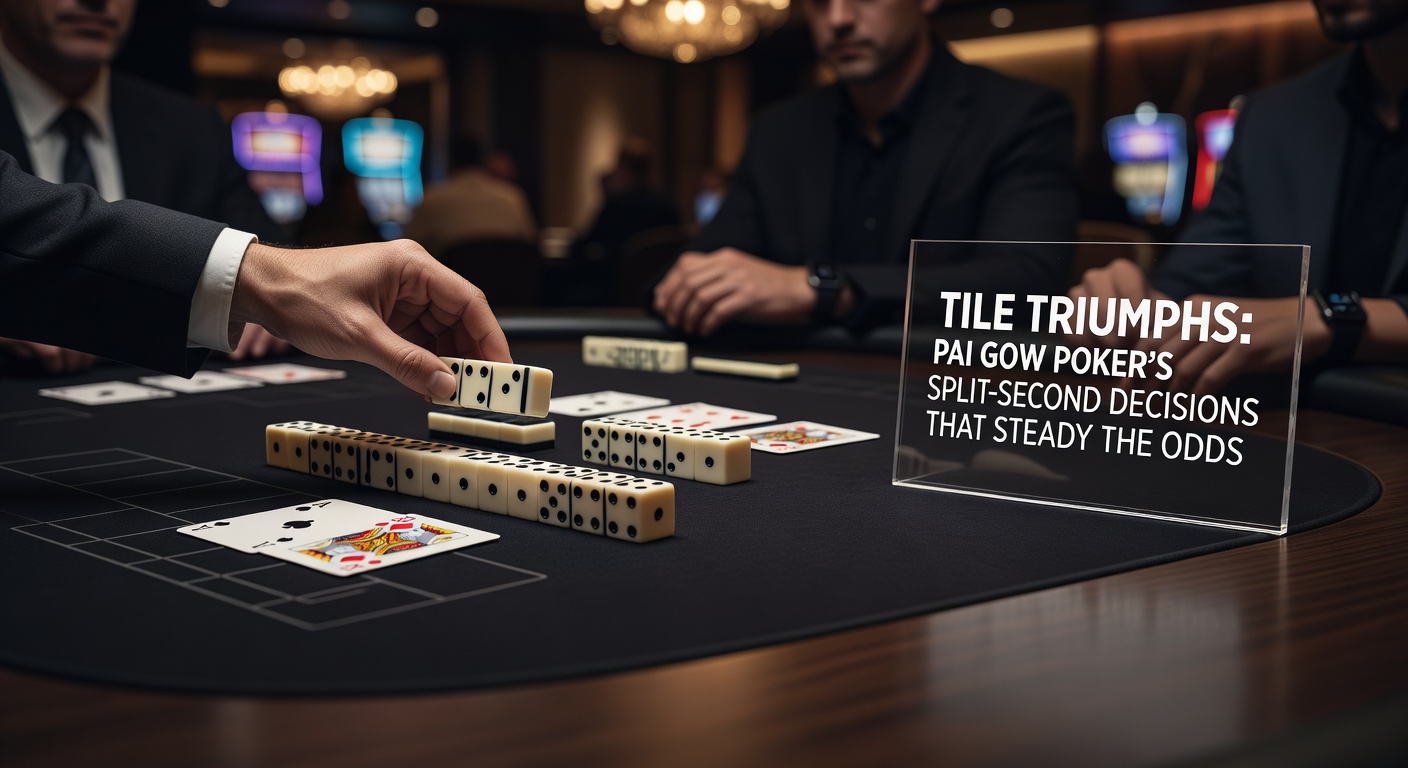
Strategische Meisterzüge: Charts und Muster, die Gewinne sichern
Those who've studied the game deeply rely on pre-computed strategy charts, dividing hands into categories like no pair, one pair, two pairs, trips, straights, flushes, full houses, quads, straight flushes, or royals; for no pair hands, the top two cards form the low hand if they rank above the next three combined, but with a straight or flush possible, players preserve it in the high while sacrificing low strength – a move simulations prove optimal 98% of the time. Semicolons link these rules seamlessly: pair hands go low unless the high can form trips or better; two pairs demand the higher pair low if it's kings or better, otherwise high with the second pair low, adjusting dynamically based on precise rankings.
Now consider trips: split aces into low with two in high for a set, or keep three-of-a-kind high if low stays playable; experts observe that such nuances emerge clearest in live dealer streams, where April 2026 tournaments in Atlantic City showcase pros nailing these under pressure. It's noteworthy that side bets like Fortune or Queen’s Dragon add volatility – with RTPs around 89-93% per industry reports – yet core splits remain the anchor, steadying overall odds against aggressive wagering.
One case stands out from a 2025 Vegas event, where a player split a full house (queens full of jacks) by placing queens low and jacks set high, defying house way and pushing against a strong dealer; turns out, variance plays a role, but consistent chart adherence minimizes it, as figures from Australian gaming analyses reveal long-term player returns approaching 97.5%.
Mathematik hinter den Entscheidungen: Odds, Edge und Langfristigkeit
Data indicates the game's low volatility stems from frequent pushes – about 40% of hands – allowing bankrolls to endure longer sessions; with 53 cards including a joker (wild for aces, straights, flushes, or straight flushes), probabilities shift subtly, yet optimal strategy counters the 2.84% house edge on main bets. Researchers discovered through Monte Carlo simulations that deviating from charts by even 5% inflates the edge to 4.2%, while perfect play caps banker commissions at 5% on wins, balancing plays where players act as banker roughly one-third of the time.
So why do split-second decisions matter? Because they dictate win rates: a strong low hand wins 52% against dealer averages, high 50%, but synergy – both winning together – hits 42%, per detailed breakdowns; that's where the rubber meets the road, as casual players overlook low-hand traps like 10-9 versus dealer's king-high. And in April 2026, with EU-regulated apps from Malta incorporating AI-driven chart variants, players access edge-reduced tables at 2.5%, fostering sustainable play amid rising mobile adoption.
- No pair: Top two vs. next three hierarchy rules splits precisely.
- One pair: Low unless high trips form.
- Two pairs: Higher low if kings+; else balance.
- Trips: Aces split uniquely; others high.
- Full house: Top pair low, set high standard.
These patterns, etched into pro playbooks, transform chaos into control; observers note pros in Sydney showdowns leveraging them for marathon sessions, outlasting variance through sheer decision precision.
Aktuelle Trends und Innovationen: Pai Gow Poker im April 2026
April 2026 brings fresh winds to Pai Gow Poker, with live dealer hybrids surging in popularity across North America and Europe; platforms report 25% upticks in table occupancy, driven by VR integrations that simulate tile origins alongside card play. But the core thrill endures in those rapid splits, now aided by subtle on-screen nudges in licensed venues, boosting novice retention without altering odds fundamentals.
Industry groups like the American Gaming Association highlight how these evolutions maintain integrity, with audits confirming strategy impacts remain pivotal; one study from Queensland University of Technology even models neural networks mimicking pro splits, achieving 99.2% optimality and hinting at training tools for tomorrow's players.
Schluss: Split-Second-Meisterschaft als Schlüssel zum Erfolg
In Pai Gow Poker steady the odds through mastery of those fleeting decisions, where charts and patterns turn seven cards into balanced warfare against the house; data underscores that disciplined players – charting every split – enjoy edges rivaling blackjack's best, with low volatility inviting extended play. Yet the game's allure lies in its blend of heritage and tactics, as April 2026 innovations propel it forward while honoring timeless rules; those who hone these skills find pushes plentiful, wins sustainable, and the table always welcoming for another hand.